Monday, 14 November 2016

8th of November~ Barbican The Vulgar: Fashion Redefined, exhibition review

Exhibition: The Vulgar: Fashion Redefined

The exhibition book (source: http://charliesmithdesign.com/work/barbican/the-vulgar/)


The Vulgar: Fashion Redefined is an exhibition being held at the Barbican, from the 13th of October of 2016 until the 5th of February of 2017. The exhibition reverberates around different definitions of the term “vulgar” and its manifestation in Fashion, thinking over the contradiction this word raises and discussing the concept of ‘good taste’ and ‘bad taste’.
The exhibition was divided in sections that were spread in the two floors of the gallery. Each section exploring – or emphasizing one interpretation of the word “vulgar”. The lighting of the entire gallery was very ‘controlled’, allowing the clothes exhibit being in focus, and sometimes creating shadows behind the mannequins. Along the exhibition, there were fragments of texts that presented or emphasized the approach of the exhibition’s theme in each section; most of these texts were taken from publications by Adam Phillips, who is a British psychologist. On the ground floor of the exhibition there were a ‘reading area’ were you could read some of his books used in the exhibition, as other publications. In the same floor there were also a video of fashion designers talking about what is ‘vulgar/vulgarity’ to them. This was one of my favourite parts of the exhibition, because it presented a completely new idea of vulgarity to me, which is related to ‘the culture of non-confrontation’; that ‘is about revealing what is normally hidden’, about challenging moral/morality and makes us think about what is acceptable and what is not acceptable.
In general, I would say that the layout of the gallery allowed the curators to lead the visitors in the exhibition through the sections, like when you read a book, I felt that I ‘should’ follow the ‘natural order’ of the exhibition to better comprehend the message being communicated. However, I cannot say that this is the best way of experiencing this exhibition; it might just be my personal way of doing it. In addition, I believe that if enough time is allowed one should revisit the parts of the exhibition the most called one’s attention in order to take the most of it.
Being honest, by the time I finished visiting every section of the exhibition I felt a little tired. I tried to take notes of what called my attention and by the end I had five A5 pages! (Which is at least the double of what I normally do) I think this exhibition was very rich in terms of texts and I was very pleased with how the texts on the wall complemented the garments to narrate the story and vice versa.
The exhibitio visits many different concepts of Vulgar and its manifestation in Fashion through various perspectives, including materials, sihlouettes, etc. I think, as a fashion designer, this exhibition was very significant for many diffenrent reasons. (So many that I cannot dare to dry to talk about each one of them in this post) One of the reasons is that it opened my eyes to my own creative process as a creator in terms of making me more aware of what I make and what it signify. Another reason is that I think this exhibition was built around the fact that trends (fashions) are born inside a place of exclusivity but eventually become popular, massified, vulgar (although other interpretations and perspectives were approached). I think this is a crucial dynamic of Fashion, especially as an industry, as it is when trends become largely adored and reproduced that the industry ‘delights itself’. In addition, I believe that is inside this dynamic that one of the most important and criticized aspects of Fashion is born: obsolescence.

(Image: http://thelondonthing.co.uk/barbican-centre-the-vulgar-fashion-redefined/)


(Image: http://www.quilondra.com/mostre/the-vulgar-fashion-redefined)


(Image: http://thelondonthing.co.uk/barbican-centre-the-vulgar-fashion-redefined/)

(Image: http://thelondonthing.co.uk/barbican-centre-the-vulgar-fashion-redefined/)

(Image: http://www.victoriasadler.com/review-the-vulgar-barbican-centre-an-idea-too-big-for-a-single-show/)

(Image: http://www.quilondra.com/mostre/the-vulgar-fashion-redefined)

(Image:  http://www.cantabriadmoda.com/2016/10/13/que-es-vulgar/)

(Image: http://thelondonthing.co.uk/barbican-centre-the-vulgar-fashion-redefined/)

(Image: http://wwd.com/fashion-news/fashion-features/the-vulgar-fashion-redefined-exhibition-opens-barbican-art-gallery-london-galliano-prada-louis-vuitton-mcqueen-10674040/)


Tuesday, 1 November 2016

25th of October~ Towards an Ethical Fashion Framework

Text: Towards an Ethical Fashion Framework
Authors: Anders Haug and Jacob Busch

           
               This text being here reviewed was written by Doctor Auder Haug and Jacob Busch.
            The matter of ‘sustainability’ is becoming more discussed as people are becoming more aware of the limitless of raw materials. Inside various industries, this subjected started to be debated, in some more than in others.
            Inside the Fashion industry this matter has been largely discussed, especially at universities, however, despite the fact that some designers can be listed as ‘ethical’ producers, not many changes have been implemented.
            This paper points the fashion producers – designers, consumers and marketers - as the ones responsible for the current situation in how products are made. According to the text they are not only the ones blame but also the ones who have the ways to do some changes, although, as noted in the article, there are factors that limited the producers power. The text reverberates around the validity of actions already took by some brands and designers, that every so often bring ‘ethical’ products to the market. It notes that not only it is not an aspect that is part integral of most of the brands production but also it is not very accessible in terms of prices for the main targeted groups within the fast fashion market - adolescents and adults.
            The text also points out the fact that information about how the products are made is not easy to get. Although some designers use terms such as ‘eco-friendly’ or ‘sustainable’ to promote their products, they usually do not give enough information to the consumer to the decide if he/she thinks the goods being advertised are consistent with their ideology. However, although I agree that fashion companies, among others, should give more detailed information about their manufacture, I would like to emphasize the role of the consumer as the one who must try to research about what he is consuming and demand more information from the makers.

            Furthermore, the text explain, in a language that is easy to understand – making it appropriate for various audiences -, that, like many other industries, the Fashion industry is engaged in a system that prioritizes the economic success. There is, in this industry it is important that the products are made for the minimum value achievable and sold for the maximum value possible, which primarily goes against the principle of ethical production. Still, as the text emphasizes, the producers, especially the designers and media, have the power of influencing the population and leading the trends to a desire for ‘ethical’ wear. This way, I think the question that we are left with is: how can the industry continue to grow economically while following social and material ethical standards?

25th of October~ It's a Joy to Be on a Bike Again!: The 1980s Onward

Text: It’s a joy to be in a bike again!: The 1980s Onward
Author: Pete Jordan

            Pete Jordan is an American – born and raised in San Francisco, California. He became famous for working as a dishwasher for ten years, an experience that he narrates on his book “Dishwasher: One Man's Quest to Wash Dishes in All Fifty States. Jordan moved to Amsterdam in 2002, where he fell in love for the city’s bike culture and history. The text being reviewed here was taken from the chapter 20 of his second book “In the City of Bikes: The Story of the Amsterdam Cyclist”.

(Pete Jordan on his bike near the Rijksmuseum passageway)

Jordan starts this chapter describing the relationship between himself, his son – Ferris - and bikes. He explains that after Ferris became too old to ride in the front of Jordan’s bike he had to install a kid’s seat on the back of his bike. However, Jordan became discontent with this, as he felt that it was bringing to an end his rides with his son – that would now be seating ‘far away’ from him. Frustrated with the separation Jordan is introduced to the solution: the bakfiets. He ends this first part of this chapter narrating his son development into a new Amsterdam cyclist.


(Bakfiests in Amsterdam)

            Next, Jordan narrates how cyclist activists campaigns, usually taken place near to the elections period, were received and how the authorities reacted to them. As a Brazilian, born and raised in Fortaleza – northeast of Brazil - it is interesting to note how seriously cycling is taken in Amsterdam, for in my city it is a recent discussion, while is has been a hot topic for Amsterdamers since 'always'. From this part of the text, what more calls my attention is the irony in the fact that the cyclists in Amsterdam would protest for better traffic conditions for them – being ultimately attended – although they do not obey to some state regulations. Jordan narrates that the state would charge a fee from cyclists caught without lights on their bikes, and that, despite the heavy patrols - which resulted in many bike users being fined – most cyclist would not care to invest in their bike, for there was a big bikes thievery problem happening at the time. To solve this problem, the police implemented new regulations to discourage the commerce of stolen bikes, obtaining a significant success.

(Queen Wilhelmina on her bicycle)

(Queen Juliana on her bicycle)

(Queen Máxima on her bicycle)

(The Duthc Royal Family in 2012)

(The Duthc Royal Family in 1980s)

(The Duthc Royal Family in 1950s)


            In general, the text explains how Amsterdam developed into ‘a city of bikes’. Now, from my personal experience, in what regards my home city – Fortaleza -, as mentioned before, bikes are becoming a more common transport choice. The reasons for that varies from place to place. According to the text, bikes became a national transport for Dutch people, endorsed by Dutch royalty. However, around the world, the reasons are many; healthy lifestyle, wean the pollution levels, improve cities’ traffic, etc. Indifferently, it is important to be aware the changes take time. In order to do a transition from one system to the other many aspects have to be rethink and it is fundamental that people do their claims and be patient.


Pictures of Befores and Afters from Amsterdam (Cycling oriented):


Monday, 17 October 2016

18th of October~ Forever in Kente: Ghanian Barbie and the Fashioning of Identity

Text: Forever in Kente: Ghanian Barbie and the Fashioning of Identity
Author: Carol Magee

Carol Magee is an associate professor at the University of North Carolina, in the US. She specialises in African contemporary Art, with a focuses on photography. Magee received her PhD from the University of California and she is currently serving on the editorial boards of Athem Studies in Popular Culture and African Arts.
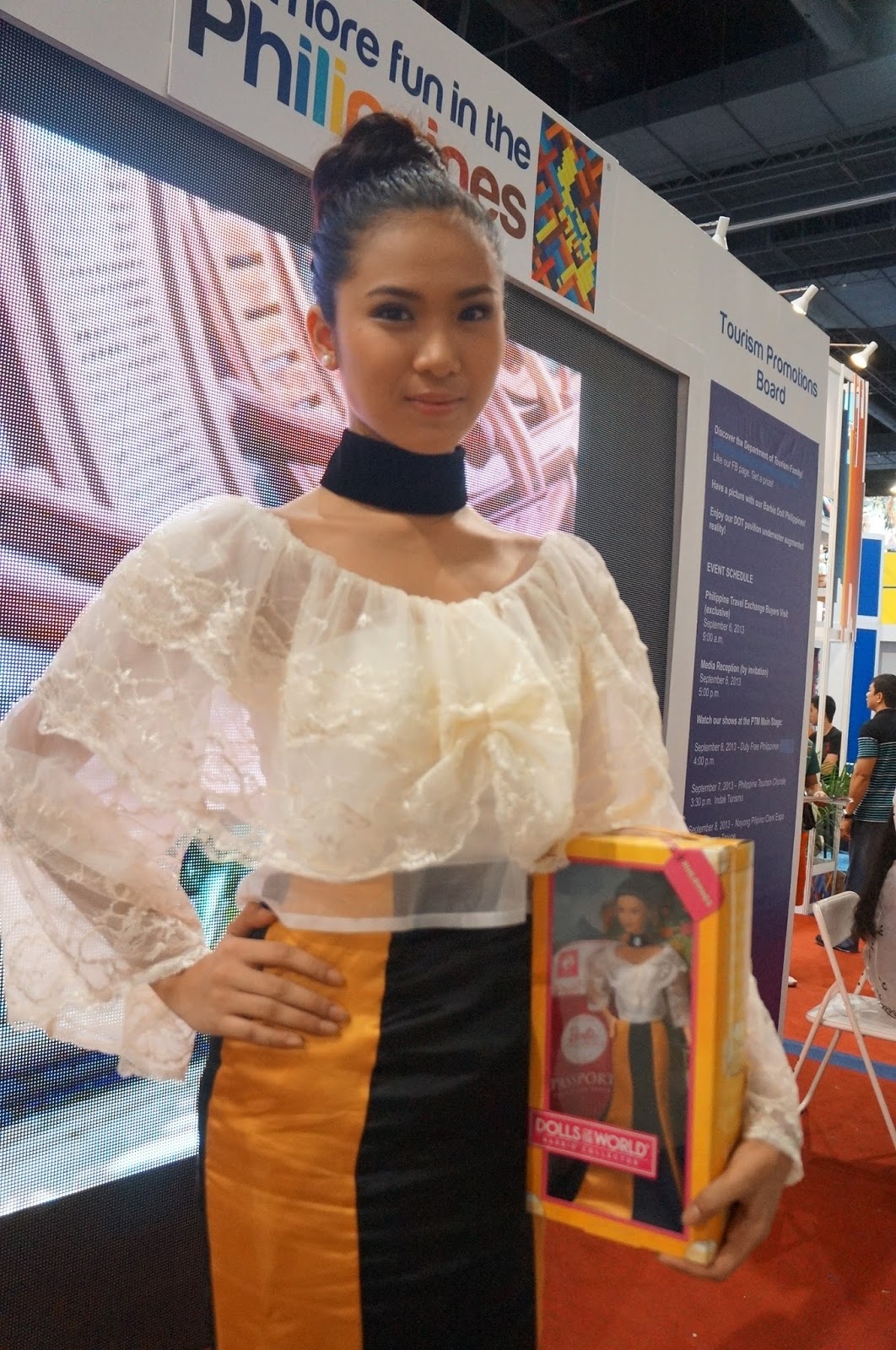
The article analyses issues of nolstagia, imperialism and indentity in the Ghanian Barbie, and in other ‘Dolls of the World’ collection dolls.
In the article, Magee narrates when she came across the Ghanian Barbie, five months after she had returned from her trip to Ghana. In a moment when she felt nostalgic for her time in there. She explains that after analysing the cultural information on the Ghanian Barbie box and on her clothing, she became aware of a greater cultural nostalgia that was taking place.


She observes that the, “Barbie is after all a fashion doll.” (MAGEE, 2005), and, for this reason, her clothes are an important part of any analyses of the doll. The author mentions that the Ghanian Barbie clothes are inspired on the Asante textile kente. An element that, according to her, “evokes a cultutal/national heritage that, I argue, promotes a reductive, essentialist notion of identity” (MAGEE, 2005) In contrast, the article mentions another doll, Asha, an African-American friend of Barbie, that also has kente in her outfit. However, Magee explains that in this second case this element is “not reductive or restrictive” (2005), as these two dolls, the Ghanian Barbie and Asha, embody two very different identities and illustrate very distinguish perspectives of world. Still, the author clarifies; both dolls expose the US domination in the world.
The “Dolls of the World” collection begun in 1980 and started being named “Princess Collection” in 2001. This Mattel collector’s Edition represents fifty countries from every continent. The dolls targets adults audiences and are not meant for playing. “Instead, they are to be placed on a shelf, where a relationship is imagined, rather than acted out with them.³” (MAGEE, 2005). For this reason, they are a great example of past memories nostalgia.


Barbir has colonized the world!

The concept of imperialism used in this article is explained as the process for which a country dominates other country resources. Magee points out that, historically, imperialistic dominations were primarily economic or political. However, in reality, one cannot be separated from the other. One example of this is the US imperialism and its promotion of democracy and capitalism. Using this idea, Magee describes the world of Barbie and economic empire of Mattel. “Barbie is sold in over 150 countries around the world, at a rate of two dolls per second.” (Varney, 1998, pp. 163-64 apud Magee, 2005.). This way the author establishes a connection between Barbie dolls and the spread of US cultural concepts around the world, and along with it a US domination, imperialism.
However, the concept of imperialism has evolved into a “New Imperialism”, whose concept focus on power is expressed through culture and civilization. Magee notes that “Culture” covers all the material production of a country and the symbolic meanings of those products. She emphasizes: “(…), products convey messages beyond their immediate and intentional meanings. Such non-overt meanings are frequently naturalized; their social and political implications for relations of power are not immediately, or necessarily, evident for either the producers or consumers.” (Magee, 2005)
Barbie dolls are a good example of how material objects can influence in a nation’s culture. Carol Ockman, cited in the article by Magee, highlights the connection between the doll and the ideal body type around the world, which is evolving towards a westernized body type. Other sources reinforce this idea, as they reveal that Barbies, even the “Dolls of the world” edition ones – which present cultural information borrowed from other countries -, help to promote US culture and values. In fact, the article describes Barbie as a symbol that reassures American middle-class values and promotes US nationalism and sense of superiority.  This way, the author questions what is the significance of the Ghanian Barbie in this setting, and how her clothing reassures it?

Kente
Going deeper into the discussion around the Ghanian Barbie and her kente inspired garment, Magee notes that the kente is a textile originally made to be  wore by the Asante royalty and still is an extremely important source of national and cultural pride in Ghana.


Ghanian former leader, Kwame Nkrumah, appropriated the kente as a national dress, which leaded, due to his association with Pan-Africanism, to the association of kente not only with Ghanian pride but also with African pride. Now, kente has become a symbol used in various ways by African-Americans to express their pride, being the clothing the most visible one. This way, according to Magee (2005), “kente has shifted from identifying a social class(royalty) of an ethinic group (the Asante), to also identifying a modern nation-state (Ghana), a continent (Africa), and a diasporic population (African-Americans).”.

Barbie
               Psychologists affirm that playing with dolls that have the same colour as you help kids to develop their sense of self-esteem. This is a privilege that African-Americans started having access to in 1968, when Christie – an African-American friend of Barbie- was launched. Yet, it was only in the 1980’s that African-American, Asian and Hispanic Barbies appeared more regularly. Nevertheless, while, according to DuCille (1994), the same brown plastic is used for all African-American manifestations of Barbie, it is through the clothing that ethnic and cultural differences are marked. Thus, within this context, the kente is used to express the African heritage, the African-ness.
               Going almost against one of the most attractive features of Barbies - being easy to be manipulated by the owner -, the Ghanian Barbie was designed “in such a way as to discourage and/or prevent her from being undressed and her outfit changed.” This means that this Barbie will remain always in a kente, and, for this reason, unlike her fellow Asha; she cannot have more than one identity. Instead, she will always have only one –cultural pride- aspect. She will never have any other subjectivities that could be add to her personality.

Asha on her Kente outfit

Other dolls.


Magee mentions that Mattel conducts a careful research while designing its dolls. As it is extremely important for them not to be offensive. In especial, for the culture who is being represented. However, even though the company did a great job designing the Ghanian Barbie clothing, on the back of the doll’s box – blended with some information about Ghana – is printed a Yoruba mask, from Nigeria.


The souvenir

               The “Dolls of the World” Barbies can be considered a souvenir, that is; an object that serves the purpose of reminding one of a travel experience, a childhood  memory or of a place one desires to visit. The relationship between a souvenir and its owner is usually distance. Magee (2005) explains that this is necessary for if the relationship achieve closeness the desire for the objected would be fulfilled and the necessity of the souvenir eliminated. In this context, the Ghanian Barbir kente outfit and detailed accessories, and the fact that her clothing can never – or are not supposed to – be removed, will preserve the doll as an distant, different, foreign object – a souvenir.
The Collection
               In order to understand the meaning of a collection it is necessary to know how that collection is organized. (Stewart, 1993, p. 154 apud Magee, 2005). In the case of the “Dolls of the World” Collection, while some dolls are based on the nation – Ghana, Italy, others are based on more specific locations – Paris, Hawaii. However, when all the dolls are displayed together, their differences are minimized and they all become part of the Barbie community. (Magee, 2005)


They look differente, but they are all clearly Barbies.


               What is interesting about the “Dolls of the World” collection is that they usually invoke romanticized cultural elements from the past of the culture being represented. That means that their costumes are usually based on references from the past of ones culture, bringing traditional elements from the past to the present. This way, their clothing, and consequently their identities, are understand as a “time-locked view of ethnicity”. This instance of nostalgia allows one to imagine a romanticized past with the culture being represented. Which means, that in a setting where most of the “Dolls of the World” are consumed in the US, this allows Americans to idealise a relationship with the other country with who they become connected through the doll.

               However, it is important to note that, because the Barbies of the “Dolls of the World” series are stuck in a romanticised past and identity, they do not exist in the same reality as the “regular” Barbie does. In this context, and while the regular Barbie can be considered an icon of feminine success – for all her clothes and accessories are read as a sign of economic and social position, the dolls of the World series are perceived as inferiors to the regular Barbie.


Some Brazilian Manisfestations of Barbie:


(They all represent a very especific social group or tradition. Although I am Brazilian I would not purchase any of these dolls for I do not identify with any of them)

               Another significant fact that Magee (2005) points out is that, differently from other Barbie’s friends and family members who are meant to have their own identities, the “Dolls of the World” do not have their own names. So, instead of having proper names – such as Barbie’s Ghanaian friend Ama, they are named; Ghanian Barbie, German Barbie, Chinese Barbie, Brazilian Barbie, between others. This is interesting because it exposes the dominance of the Barbie – a US figure, over “others”. Magee notes that “Without clearly delineated identities, it is easier to forget the individuality of the peoples of those countries represented.” (Magee, 2005)
               In the end, Magee meditates around the fact that the Dolls of the World dolls can serve as a 'distraction', as they allow the owners to create an imagined reality with the culture that the doll is representation, which keeps the owners distant from the true realities of the people being portrayed. Rather than a dicussion about the desig of the Dolls - if Mattel did or not a good job representing the cultures they intended to - this text reveberates if it is 'ok' to 'sell' this unrealistic - yet detailed - cultures.


Some more Dolls of the World Barbies:

China

Australia

UK


Philippines

Argentina
India

See more here: http://www.thebarbiecollection.com/gallery/dolls-of-the-world


Tuesday, 11 October 2016

11th October~ The Lure of the East; Exhibition Making and Orientalism

Text: Staging The Lure of the East. Exhibition Making and Orientalism
Author: Christine Riding

The exhibition The Lure of the East, held at the Tate’s Britain was the first large-scale survey of British Orientalism painting. It was not the first one to address Orientalism in the visual arts. And, according to Tate Britain, the exhibition was fitting and singular, as the only other exhibition of this level had been held twenty-three years before. According to the text, some decisions made during the development of the exhibition project are common to all exhibitions, as all curators have to work considering the gallery space and budget while developing a quality content. The Lure of the East was organised in categories (portraiture, religious subjects, interior and harem subjects, etc.). This decision was made to achieve the original idea of the exhibition as an exploration of the work of painters and watercolourists reimagining settled conventions to new subjects and environments. Riding relates that some painting that were key pieces in the curators’ “wish list” owned by the Qatar Museums Authority could not be collected in time, not being included in the exhibition nor in the catalogue.
The text focus in the “broader context and reception of Orientalist art”, specifically in London in 2008. The author narrates what was like working in an art-gallery in a period of political tension between the East and the West and her perception of the west as an ignorant to the Islam and Muslims. She also reports two episodes in which Tate Britain’s was involved in the “insensitive perception of Islam and Muslim”. She explains that these episodes had influenced in how The Lure of the East developed in to a project that, she states, “must be understood within this rather tangled political, social and cultural landscape.” (Riding, 2001) Riding mentions the exhibition catalogue introduction about Orientalism points diplomatically “that ‘the political dimension of our subject-and indeed of each object within it-is never far from the surface’ and that the exhibition tour coincided ‘with a moment when European and American political relations with the Middle East have been particularly difficult.” (Riding, 2011) In addition, the author notes that this introduction was the longest and most complex she had ever personally read until the present moment.
The text reports the importance of the exhibition catalogue, which is how the curators can explain key points and contexts of the exhibition to the uninformed visitors of the gallery. She explains that due to the limited number of words the curators can fit in the catalogue, they have to be more careful with what they write, as the information could generate misunderstandings. She also points out that all the information given to the visitors is from an academic opinion of the curators only, excluding the viewpoints of academics from the East. For this reason, the layouts had to be thought carefully, especially considering the religious settings and, as a creative result, the curators decided to bring “other ‘voices’ (that is alternative readings and opinions)” from international commenters, some of whom were based in Jerusalem, Baghdad, Istanbul, etc.

Riding narrates a little of the marketing process to invite visitors for the exhibition. She  explains that, for her, there are two types of visitors. The first being genuinely interested visitors that are curious and seek for knowledge about the theme.  The second type is, in her words, “everybody else”, the general visitor, which is the public that Tate Britain decided to target. She comments about the paintings chosen to be used in the marketing campaign for The Lure of the East, Hhareem Life and Leila. She emphasises that the paintings portray a “gender stereotyped”, in which women are objectified. Riding explains that a majority of advertisings, almost ninety percent, uses sexualised women to sell products.